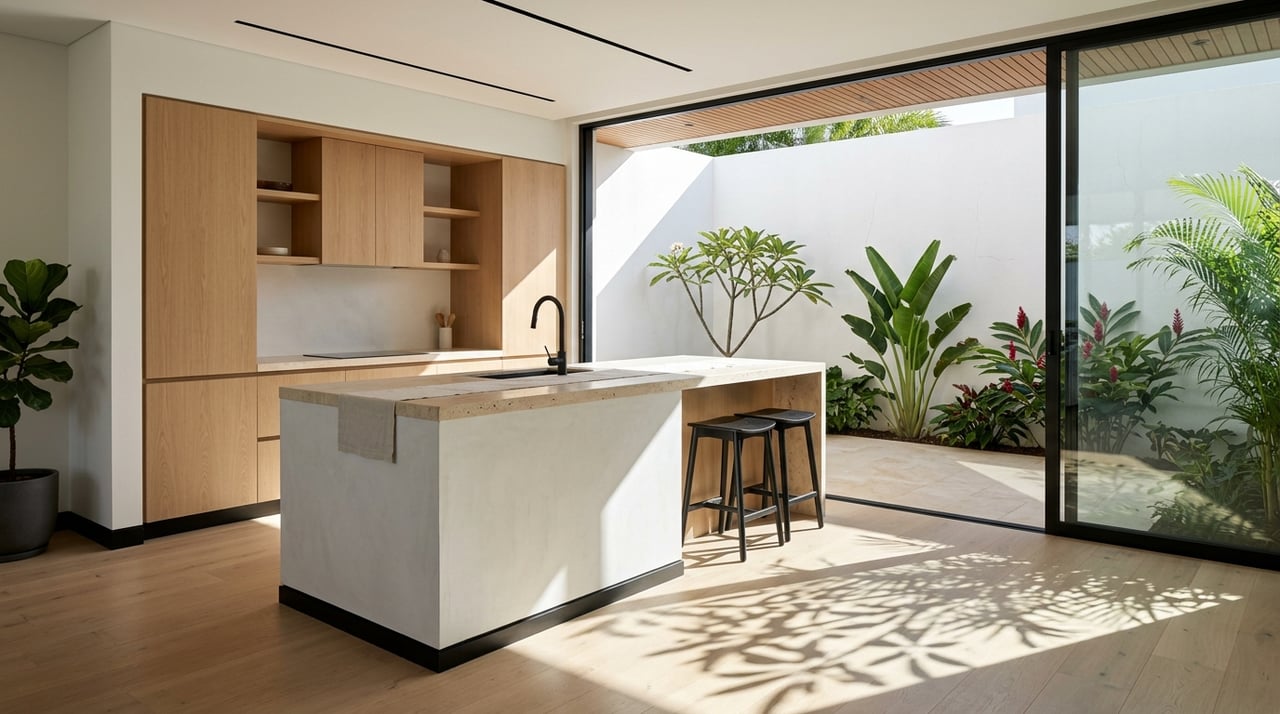
Dreaming of a home that feels fully your own in one of Guanacaste’s most established resort communities? If you are considering Hacienda Pinilla, custom building can be a compelling path, but it works best when you understand how lot selection, approvals, infrastructure, and timeline all fit together. With the right planning, you can shape a home around privacy, orientation, lifestyle access, and long-term use. Let’s dive in.
Why Custom Building Fits Hacienda Pinilla
Hacienda Pinilla is not a typical subdivision. It is a roughly 4,500-acre gated resort and residential community in Santa Cruz with about three miles of coastline, multiple residential enclaves, and a lifestyle centered on beach, golf, and outdoor amenities.
That setting matters because your home is part of a broader experience. Official community information highlights amenities that include a beach club, golf, horseback riding, tennis and pickleball, mountain biking, surf access, Pinilla Market, a medical clinic, a security office, an ASADA office, and administrative offices.
For many buyers, that makes custom building especially attractive. Instead of adapting to an existing floor plan, you can shape the home around how you actually plan to live, entertain, and spend time in Hacienda Pinilla.
Start With the Homesite
The most important decision is usually not the house. It is the lot.
In Hacienda Pinilla, the trade-offs are practical and meaningful. You may be balancing view corridor, privacy, tree cover, golf frontage, beach proximity, elevation, and how much surrounding infrastructure is already complete.
Official real estate pages currently highlight communities such as El Jaguar and Las Lapas. El Jaguar is positioned around expansive homesites with a strong connection to nature, while Las Lapas is described as the newest golf-front community with 49 homesites.
If golf is central to your lifestyle, that can shape your search immediately. Hacienda Pinilla’s 18-hole par 72 course, which can play to 7,200 yards, is a major part of the community’s identity, so golf-front or golf-adjacent lots are a core market segment rather than a small niche.
What to Compare When Touring Lots
When you evaluate homesites, focus on the factors that will affect both design and daily use:
- Orientation and exposure for light, shade, and breezes
- Privacy from roads, neighbors, and shared sightlines
- Lot shape and topography for building efficiency
- Tree cover and natural setting for ambiance and design constraints
- Proximity to golf or beach access based on your priorities
- Infrastructure readiness including utilities and service availability
- Community context within a newer or more established enclave
Lot sizes and price points can vary widely in Hacienda Pinilla. Directional listing examples in the market show homesites from roughly 1,200 to more than 2,700 square meters, with asking prices that range significantly depending on enclave, size, and positioning.
That range is exactly why a curated search matters. A lower-priced lot is not automatically the better value if it needs more preparation, has more constraints, or delays your build timeline.
Match the Enclave to Your Goals
Not every buyer wants the same version of Hacienda Pinilla. The right enclave depends on how you want to use the property.
For Golf Access
If you want your home experience tied closely to the course, golf-front and golf-adjacent lots should be high on your list. Las Lapas, as the newest golf-front community highlighted by official project materials, naturally stands out for buyers who want that connection built into the setting.
For Beach-Oriented Living
Hacienda Pinilla’s official beach information identifies Playa Avellanas, Playa Langosta, and Playa Mansita as accessible beach areas within the project. If daily beach access is a bigger part of your vision than golf frontage, your lot search should prioritize ease of movement to these areas rather than focusing only on interior community positioning.
For Privacy and a Natural Setting
If privacy, larger homesites, and a stronger nature-connected feel matter most, El Jaguar may align better with your goals. In this type of setting, lot orientation, vegetation, and distance from busier amenity corridors can be just as important as raw square meter count.
For Flexible Long-Term Use
If you want a home that can work for personal use, hosting, and future resale appeal, balance is key. Many buyers are best served by a lot that offers practical access to amenities while still allowing strong privacy and a flexible architectural layout.
Confirm If the Lot Is Truly Build-Ready
This is where many buyers need extra clarity. A lot that looks ready on a map or in a brochure may not be ready for immediate design and construction.
Market examples within Hacienda Pinilla show that readiness can vary. One resale lot was advertised with utilities in place and no construction deadline, while another newer homesite offering was still only partially complete on infrastructure, with delivery expected later.
That means you should confirm details before assuming your next step is simply hiring an architect. In practice, build readiness can affect your design start date, permit timing, contractor scheduling, and overall carrying costs.
Questions to Ask About Readiness
Before moving forward, verify:
- Whether utilities are already in place
- Whether water availability can be requested for the lot
- Whether sanitary discharge availability has been addressed
- Whether roads and access are complete
- Whether the enclave infrastructure is fully delivered
- Whether there is any construction deadline or phased delivery schedule
These questions may sound technical, but they are central to your timeline. In a luxury build, time lost at the lot stage can ripple through every later decision.
Understand the Approval Path Early
In Santa Cruz, permit mechanics matter. According to the municipal portal, minor work can be handled locally only when no professional is required, but major work or projects requiring an architect or engineer go through APC and CFIA.
For a new custom home, you should expect a formal process. CFIA also states that all new or provisional construction requires a municipal construction license under Article 74 of Costa Rica’s Construction Law.
Before the formal permit stage, CFIA’s APC Requisitos system is used to request pre-construction items such as water availability, sanitary discharge availability, and other alignments. After municipal approval, the permit payment stage in APC requires the municipal payment voucher and INS policy certificate to be uploaded.
Your Local Build Team Matters
In practical terms, custom building in Hacienda Pinilla usually works best when you have a coordinated local team that includes:
- A real estate advisor
- A CFIA-registered architect or engineer
- A permit coordinator
- A contractor
- A community management or COA contact
That structure matters because your home is moving through both public approvals and private community review. Local experience helps you avoid treating those as separate conversations when they are actually connected.
Community Guidelines Shape the Design
Inside Hacienda Pinilla, property management and the COA structure are intended to preserve standards and architectural integrity, enforce community rules, maintain common areas, and manage condominium finances. Owners also contribute monthly fees based on the annual budget approved at the owners’ meeting.
For you, this means the design process is not only about personal taste. Your plans also need to fit the community’s governing framework.
That is not necessarily a drawback. In many luxury resort communities, clear architectural and property standards help protect consistency, presentation, and long-term value.
Budget With More Than Construction in Mind
The build budget is about far more than materials and labor. A 2025 Costa Rica architecture and engineering guide identifies key budget drivers as location, terrain, materials, finishes, design and engineering fees, permits, and contingencies.
That is especially relevant in Hacienda Pinilla because two homes with similar interior square footage can have very different total costs. Lot conditions, infrastructure readiness, design complexity, and finish expectations all shape the final number.
Core Budget Categories
When planning your numbers, include:
- Lot acquisition cost
- Architectural and engineering design
- Permit and approval costs
- Contractor pricing
- Materials and finish selections
- Site-specific preparation based on terrain
- Insurance and permit-payment requirements
- Contingency reserves
- Ongoing community fees
A realistic budget is one of the best tools you have. It helps you make cleaner design choices and reduces the risk of expensive scope changes later.
Set a Realistic Timeline
If you are building from the ground up, patience and sequencing are part of the process. The same 2025 guide notes directional planning ranges of about 2 to 6 weeks for permit processing and roughly 6 to 12 months for construction, depending on complexity, weather, and location.
These are not guarantees, but they are useful planning benchmarks. In Hacienda Pinilla, the timeline can also be affected by whether the homesite is already serviced or tied to newer infrastructure phases.
A practical way to think about timing is this: lot verification comes first, design follows, permits move through the Santa Cruz and CFIA process, and only then does full construction begin. Buyers who plan around that sequence tend to make better decisions and face fewer surprises.
When Resale Makes More Sense
Custom building is not always the best answer. In some cases, buying an existing home is the better fit.
Resale is usually the faster path to occupancy. If your priority is enjoying Hacienda Pinilla soon, or if you prefer to avoid the moving parts of lot evaluation, design coordination, and construction management, an existing home may be the more practical option.
Building makes more sense when you care deeply about layout, orientation, privacy, and finish quality. If you want to control how the home sits on the land and how it supports your lifestyle, custom construction often delivers a result that resale cannot fully match.
A Smarter Way to Plan Your Build
The best custom-home projects in Hacienda Pinilla usually begin with disciplined front-end decisions. Instead of falling in love with a concept too early, start by matching your lifestyle goals to the right enclave, confirming the lot’s true readiness, and building a local team that understands both the Santa Cruz approval path and the community framework.
That approach gives you clarity from day one. It also helps ensure that the home you build is not only beautiful, but well-positioned within one of Guanacaste’s most distinctive coastal communities.
If you are weighing homesites, comparing enclaves, or deciding between building and buying resale in Hacienda Pinilla, Luxury Properties Costa Rica offers private consultation, curated property tours, and concierge-style guidance tailored to high-value buyers on Guanacaste’s Gold Coast.
FAQs
What makes Hacienda Pinilla a good place to build a custom home?
- Hacienda Pinilla combines a large gated resort-residential setting with beach access, golf, and multiple residential enclaves, which gives you more flexibility to match a homesite and home design to your lifestyle goals.
Which Hacienda Pinilla enclave is best for golf-focused buyers?
- Official project materials identify Las Lapas as the newest golf-front community, making it a strong option if golf frontage or adjacency is a top priority.
Which Hacienda Pinilla area may suit buyers seeking privacy?
- El Jaguar is positioned around expansive homesites with a nature-connected feel, so it may appeal to buyers who prioritize privacy, space, and a more natural setting.
Do all Hacienda Pinilla lots have utilities and infrastructure in place?
- No. Market examples show that some lots are marketed with utilities in place while others are still tied to newer infrastructure phases, so you should verify readiness before planning a build schedule.
What approvals are needed to build a home in Santa Cruz?
- For a new custom home, the process typically involves APC and CFIA, pre-construction requests such as water and sanitary availability, and a municipal construction license, with later APC uploads including the municipal payment voucher and INS policy certificate.
How long does it usually take to build a custom home in Hacienda Pinilla?
- Directional planning ranges cited in the research suggest permit processing can take about 2 to 6 weeks and construction about 6 to 12 months, depending on complexity, weather, location, and infrastructure readiness.
When is buying resale in Hacienda Pinilla better than building?
- Resale is often the better fit when you want a faster path to occupancy or prefer to avoid the added coordination involved in lot selection, design, permitting, and construction.
What professionals should you have on your Hacienda Pinilla build team?
- A strong local team often includes a real estate advisor, a CFIA-registered architect or engineer, a permit coordinator, a contractor, and a community management or COA contact.
