Trying to choose between a condo and a villa in the Coco, Hermosa, and Ocotal corridor? It is one of the most important decisions you will make if you are buying on this stretch of Guanacaste coast, because the right fit is about more than price alone. You need to balance lifestyle, privacy, upkeep, ownership structure, and how you plan to use the property over time. This guide will help you compare both options clearly so you can move forward with confidence. Let’s dive in.
Why This Corridor Draws Buyers
Playas del Coco, Playa Hermosa, and Playa Ocotal all sit within Sardinal district in Carrillo canton, but they offer slightly different day-to-day experiences. The municipality identifies Playas del Coco as a major tourism destination located about 25 kilometers from Liberia, which helps explain its strong service base and accessibility.
Carrillo’s local information also notes that the highest concentration of population and services on this part of the coast sits between Hermosa and Ocotal, with Coco serving as the main hub for tourist, dining, medical, financial, fishing, and water-sports services. For you as a buyer, that means this area can function as a practical home base rather than a remote beach getaway.
Hermosa and Ocotal each add a different rhythm to the corridor. Hermosa is known for water-based activity and its gray-sand beach, while Ocotal is described locally as family-friendly, with fishing, diving, and year-round usability. If you want calm beach access without being in the busiest part of the area, Ocotal often enters the conversation quickly.
What “Condo” Means in Costa Rica
In Costa Rica, a condo is not just a property style. It is a legal regime governed by Law 7933, which requires a written condo declaration, an administrator, an annual owners’ assembly, and a formal set of rules that define shared use and common expenses.
That matters because when you buy a condo, you are not only buying the residence itself. You are also agreeing to a framework for how the community operates, how budgets are approved, and how common spaces are maintained. Common expenses can include administration, maintenance, repairs, and cleaning of shared areas.
The law also allows different project formats, including horizontal condominiums and private urbanizations that may contain houses and lots. In practical terms, that means a villa can sometimes sit inside a condominium-style development, so the choice is not always as simple as apartment versus detached home.
Why Ownership Structure Matters Near The Beach
Before you decide between a condo and a villa, you should also understand title status. Carrillo’s local guidance explains that the first 200 meters from the coast form part of the maritime-terrestrial zone, which includes public and restricted areas controlled by the state.
That means not every near-beach property is ordinary fee-simple ownership. Costa Rica’s condo law also recognizes concession-based projects that require prior authorization. If you are looking close to the shoreline, one of the first due diligence steps is confirming whether the property is titled land or concession-based.
When A Condo Makes More Sense
A condo is often the stronger fit if you want ownership to feel more streamlined. For many second-home buyers, especially those who split time between Costa Rica and another country, the appeal is simple: less day-to-day responsibility, more predictability, and access to shared amenities.
This is easy to see in local projects such as Pacifico in Playas del Coco. The community includes a retail village, grocer, restaurants, shops, a beach club, multiple pools, sports courts, hiking trails, a dog park, a boat club, concierge service, and rental or property management. Local inventory there has started in the mid-$200,000s for condo product, which shows why condos are often the more accessible entry point within the same submarket.
If your ideal ownership experience is lock-and-leave, a condo can be very compelling. You may have shared security, maintained common areas, and a setup that is often easier for short stays or seasonal use.
Condo Advantages
- Lower entry pricing compared with freestanding homes in the same community examples
- Shared amenities that can elevate day-to-day living
- Less direct maintenance responsibility
- Better fit for buyers who want simple part-time ownership
- Often attractive for vacation-use patterns, depending on project rules
Condo Trade-Offs
- Less privacy than a detached home
- More rules governing shared spaces and exterior changes
- Ongoing HOA or common charges
- Rental flexibility may depend on the project’s regulations
When A Villa Makes More Sense
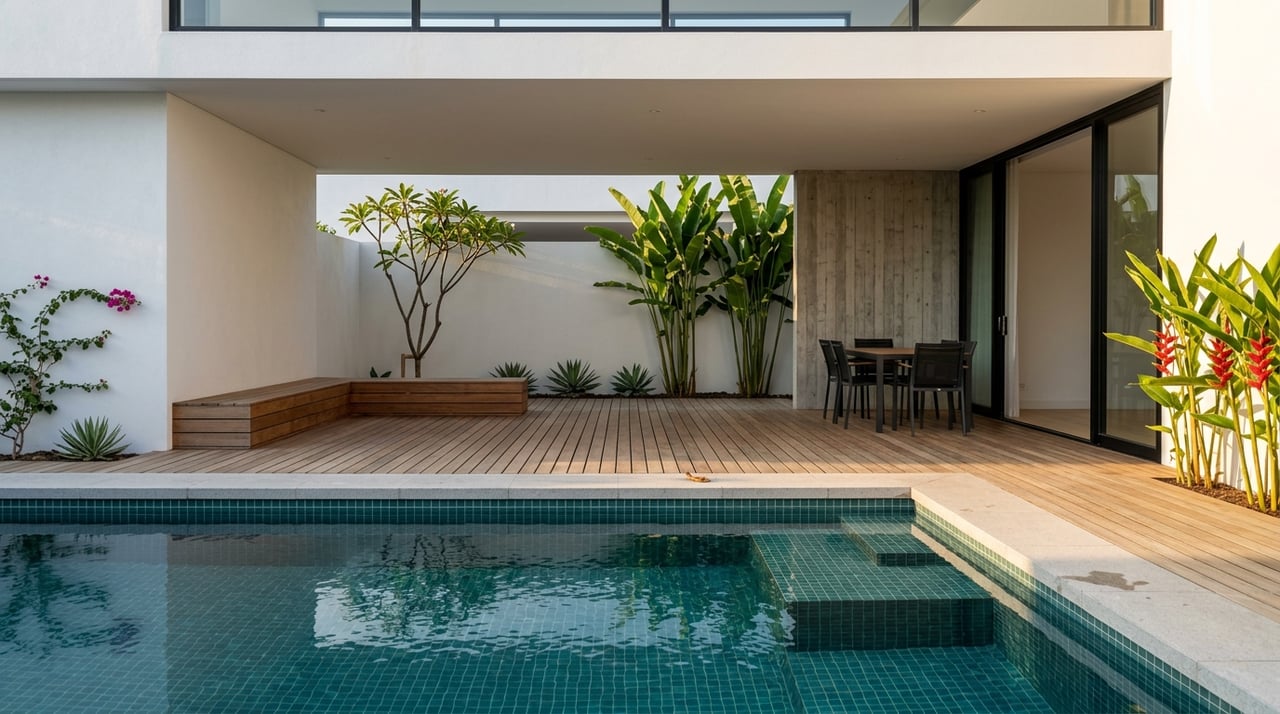
A villa is usually the better fit if space, privacy, and a more residential atmosphere matter most to you. If you want a detached home, a private pool, more room for guests, or a stronger sense of separation, a villa often delivers that lifestyle better than a condo.
In this corridor, villa living does not always mean giving up amenities. Pacifico’s Bosque Tropic Village has offered freestanding four-bedroom homes with private pools, and its Mira Estate Homes have been positioned as custom-build opportunities within the same broader community. Reported pricing examples in that market placed freestanding homes from the mid-$800,000s and custom residences from the mid-$1 million range.
That price spread tells an important story. Choosing a villa here is not only a lifestyle decision. It is also a capital-allocation decision, because the jump from condo inventory to detached-home inventory can be substantial even within one community.
Villa Advantages
- More privacy and interior space
- Greater outdoor living potential
- Stronger residential feel
- Better fit for buyers who prioritize autonomy and private amenities
Villa Trade-Offs
- Higher purchase price in many local examples
- More upkeep and vendor coordination
- Greater responsibility for property care, even in managed communities
- Possible need for ongoing oversight if you are an absentee owner
The Hybrid Reality In Coco, Hermosa, And Ocotal
One of the most useful things to know is that local inventory is often hybrid rather than strictly one category or the other. A development may include condominiums, villas, and studios within the same setting, with a mix of shared and private amenities.
Los Almendros de Ocotal is a strong example. The resort describes a mix of privately owned condominiums, villas, and studios, along with shared and private pools, on-site check-in, and walk-to-beach access. For you, that means the best choice may not be condo versus villa in the abstract, but which ownership format works best within the right micro-location and community structure.
How To Think About Rental Potential
If rental use is part of your plan, the corridor has clear demand drivers. Costa Rica recorded 2.6 million air tourists in 2024, and 881,289 of those arrivals came through Daniel Oduber Airport in Guanacaste. Combined with Coco’s service density, that helps explain why managed properties in this area often draw interest from buyers who want vacation-use flexibility.
Still, rental potential should never be assumed. Occupancy, nightly rates, and usability depend on the specific project, beach position, management setup, and community rules. In Pacifico, for example, rental and property management is available, but it is a separate and voluntary program rather than an automatic feature of ownership.
If rental income matters to you, ask early about:
- Community rental rules
- Property management options
- Owner-use limitations, if any
- Common fees and service costs
- How maintenance and guest support are handled
A Simple Decision Framework
If you are still weighing both options, a few practical questions can make the choice clearer.
Choose A Condo If You Want:
- Simpler ownership
- A lower entry point based on local examples
- Shared amenities and security
- Easier lock-and-leave use
- A property that may pair well with professional management options
Choose A Villa If You Want:
- More privacy
- More interior and exterior space
- A detached-home experience
- Greater control over your daily living environment
- The ability and budget to handle more upkeep
Your Best Next Step Is Due Diligence
In this part of Guanacaste, the smartest buyers look beyond the headline lifestyle and focus on the underlying details. Before you commit to either property type, confirm the ownership regime, understand the HOA or condominium rules, review any rental restrictions, and verify whether a near-beach property is titled or concession-based.
That level of clarity is especially important for international buyers who want the process to feel smooth, predictable, and well managed. The right home should match not only your taste, but also your timeline, your use case, and your comfort with ongoing ownership responsibilities.
Whether you are drawn to a serviced condo in Coco, a hillside villa above Hermosa, or a beach-close residence in Ocotal, the best choice is the one that fits how you actually want to live. For tailored guidance, curated tours, and private buyer support along Guanacaste’s coast, connect with Luxury Properties Costa Rica.
FAQs
What is the main difference between a condo and a villa in Coco, Hermosa, and Ocotal?
- A condo usually offers simpler ownership, shared amenities, and more rules, while a villa usually offers more privacy, more space, and more maintenance responsibility.
Are condos in Costa Rica always apartments?
- No. In Costa Rica, a condo is a legal ownership regime, and that structure can include different property types, including houses and lots in some projects.
Is Playa Ocotal a good place to look for beach-close properties?
- Local sources describe Playa Ocotal as usable year-round, known for fishing and diving, and appealing for buyers who want beach access outside the busiest part of Coco.
Are villas in this Guanacaste corridor always independent homes?
- Not always. Some villas are detached homes inside larger managed communities, which means you may still have shared amenities and community rules.
Should buyers near the beach in Carrillo check title status carefully?
- Yes. Local guidance notes that the first 200 meters from the coast fall within the maritime-terrestrial zone, so it is important to confirm whether a property is titled or concession-based.
Do condos in Playas del Coco have rental potential?
- They can, but rental performance and flexibility depend on the project’s rules, location, and management structure rather than on the property type alone.
