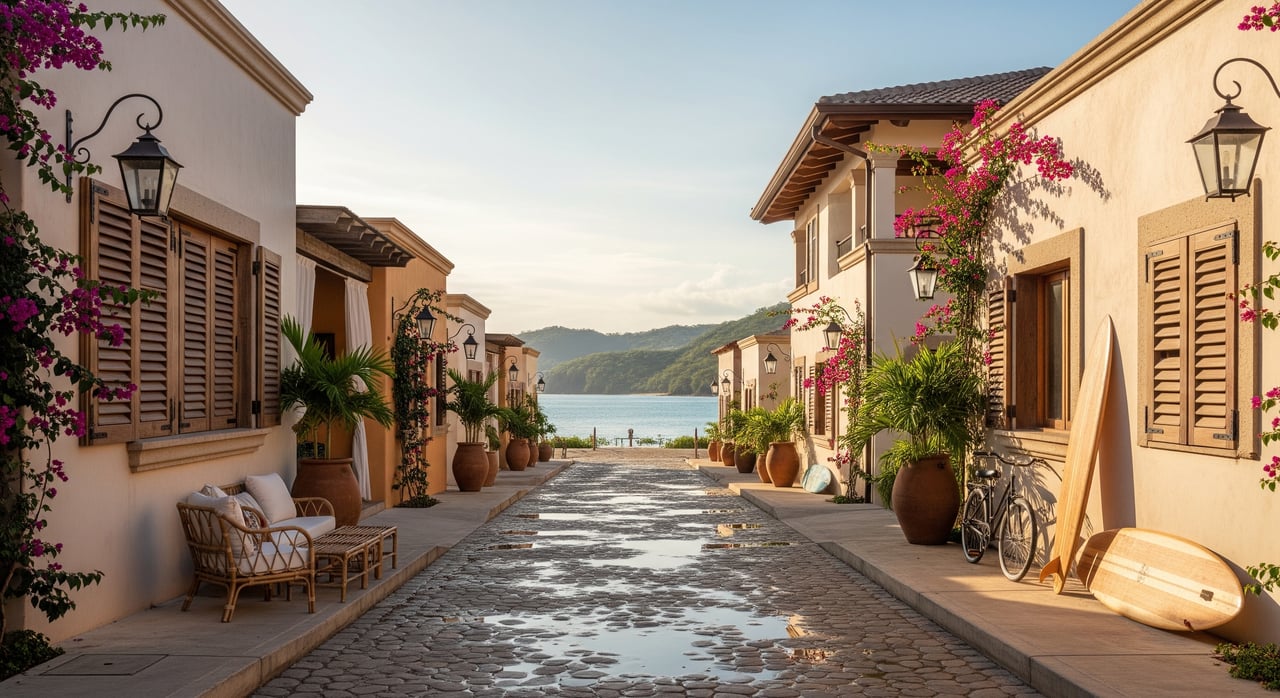
Imagine stepping out your front door and hearing only birds, footsteps, and the ocean. In Las Catalinas, the streets themselves feel like a living room, where you move from home to café to beach on foot. If you’re weighing a second home in a small, walkable beach town, this guide shows you how daily life actually works here, from mobility and groceries to community rhythm and buyer essentials. Let’s dive in.
What car-free living feels like
Las Catalinas is planned around people, not cars. The town core has narrow pedestrian streets, shaded stairways, and plazas that keep everything within a short walk. Architecture and landscaping invite outdoor living, with lookout points to the ocean and trailheads leading into the hills. The scale is boutique, with a limited number of residences and a small cluster of restaurants and shops.
Getting around without a car
The central neighborhoods operate as a car-free core. Service, delivery, emergency, and maintenance vehicles have controlled access. Some residents with mobility needs use authorized small electric vehicles on approved routes. Always confirm current HOA rules for what is permitted and where.
Most international visitors fly into Daniel Oduber Quirós International Airport in Liberia and continue by ground transfer. Private cars are usually parked on the periphery or in designated resident lots. Guests and deliveries use access points for drop-off, and you should confirm exact parking locations and any fees with property management.
For trips outside town, you can rely on taxis, shuttle services, or private drivers. Many homeowners keep a car for regional errands but store it away from the pedestrian streets. Inside Las Catalinas, walking and biking are the default.
Your day-to-day rhythm
Beaches and trails anchor daily life. You might start with a sunrise run on the paths, a hike to a lookout, or a calm paddle before breakfast. Non-motorized water activities like swimming, snorkeling, and paddleboarding are common, with conditions changing by beach and season.
Dining and shopping feel intimate and local. Expect a handful of cafés, bars, and restaurants with boutique character and changing hours, especially in green season. For everyday items, small markets or convenience-style shops cover basics, while larger grocery runs often happen in nearby towns or via delivery services.
Shared outdoor spaces keep the social scene relaxed and welcoming. You’ll find fitness and wellness classes, guided hikes, and community events that ebb and flow with the seasons. Population and activity levels rise during dry season and international holidays, then return to a quieter cadence.
Practical essentials
Parcel delivery is supported, with vehicles stopping at designated points. Larger deliveries for furniture or renovations are coordinated with property management and may require temporary vehicle access. Internet service is widely available and many homes advertise fiber or high-speed plans, but you should confirm provider options and speeds for any property you consider.
Onsite medical services are minimal. For urgent or specialized care, residents typically use clinics or hospitals in larger towns such as Liberia. Banking, government services, and other administrative errands are usually handled outside Las Catalinas or online.
Is Las Catalinas right for you?
- Mobility: Daily life involves stairs, slopes, and pedestrian alleys. Consider how this fits your household’s mobility needs.
- Outside trips: Plan for regular excursions for larger groceries, medical appointments, or specialty shopping.
- Social preferences: You’ll enjoy an intimate, neighborly atmosphere focused on outdoor living rather than big nightlife or broad commercial districts.
- Climate: Guanacaste has a dry season from roughly December to April and a green season from May to November. Shade and ventilation matter for comfort.
- Ownership goals: If you plan to rent short-term, check HOA rules, rental restrictions, and property management services.
What buyers should know
Homes range from vacation condos to private villas and townhomes. Many are positioned for second-home use and may participate in short-term rentals. Review HOA documents for rental policies, vehicle guidelines, and community standards before you buy.
Most owners use local property managers for maintenance and rentals. Confirm management fees, service levels, and utility arrangements in advance. For legal and closing matters, use an attorney and consider title insurance as standard practice for foreign buyers.
Costa Rica is generally considered safe for expatriates and visitors, but you should follow normal precautions and research current advisories. For long-term stays, many owners carry private health insurance and plan for regional or international care as needed.
A week without a car
- Monday: Morning trail run, laptop time at home, sunset swim.
- Tuesday: Yoga in the plaza, a quick café lunch, then an afternoon paddle.
- Wednesday: Delivery day for pantry staples, dinner at a local spot.
- Thursday: Shuttle to a nearby town for a larger grocery run and errands.
- Friday: Guided hike with neighbors and a quiet evening on the terrace.
- Saturday: Beach day with snorkeling and a relaxed dinner.
- Sunday: Slow breakfast, a look at open homes, and a stroll through the plazas.
Pro tips for a smooth stay
- Arrange airport transfers ahead of arrival and confirm drop-off points.
- Pack light and use wheeled luggage that rolls easily over pavers.
- Preorder groceries or schedule a first-week delivery for essentials.
- Confirm your internet provider and plan before a remote-work stretch.
- Coordinate any large deliveries in advance with property management.
- Bring supportive footwear for stairs and stone paths.
- Plan for sun protection and hydration in the dry season.
Remote work and routine
If you work remotely, you’ll find quiet, comfortable spaces at home and around town. Many properties offer reliable high-speed internet, but it is wise to verify plan options and speeds. Schedule outdoor activities in the cooler mornings and late afternoons for a balanced routine that keeps you energized.
Next steps
If a walkable, boutique beach town fits your lifestyle, touring properties in person is the best way to understand daily rhythm, access points, and home layouts. Our team offers a concierge-style Buyer’s Advantage service that coordinates private consultations, curated property tours, and cross-border logistics. Connect with Luxury Properties Costa Rica to plan a visit and explore available homes in Las Catalinas.
FAQs
How far is Las Catalinas from Liberia Airport (LIR)?
- Most visitors arrive via Liberia’s international airport and continue by ground transfer, with total travel time varying by route and traffic; confirm current timing with your shuttle provider.
Can I own a car if I buy in Las Catalinas?
- Yes, many owners keep cars for regional trips, but driving is limited in the pedestrian core and parking is typically on the periphery; check HOA rules for details.
Is Las Catalinas walkable enough for everyday errands?
- Yes for dining, fitness, socializing, beaches, and trails; for larger grocery runs, specialty shopping, or medical care, you will likely leave town regularly.
What is the vibe during high season?
- Expect a boutique, outdoor-oriented atmosphere with increased activity during the dry season and holidays, then a quieter cadence at other times.
Are medical services available for residents nearby?
- Onsite care is minimal; for urgent or specialized services, residents use clinics or hospitals in larger towns such as Liberia and maintain an emergency plan with management.
How suitable is the town for households with children or limited mobility?
- The pedestrian layout suits active households, but stairs and slopes can be challenging for strollers or residents with limited mobility; review specific property access features.
How reliable is internet for remote work in Las Catalinas?
- Many homes advertise fiber or high-speed plans suitable for video calls; confirm provider options and speeds for the property you are considering.
Where do guests park when visiting?
- Visitors typically use designated guest or peripheral parking areas and drop-off points near the pedestrian core; confirm locations and any applicable fees with management.
